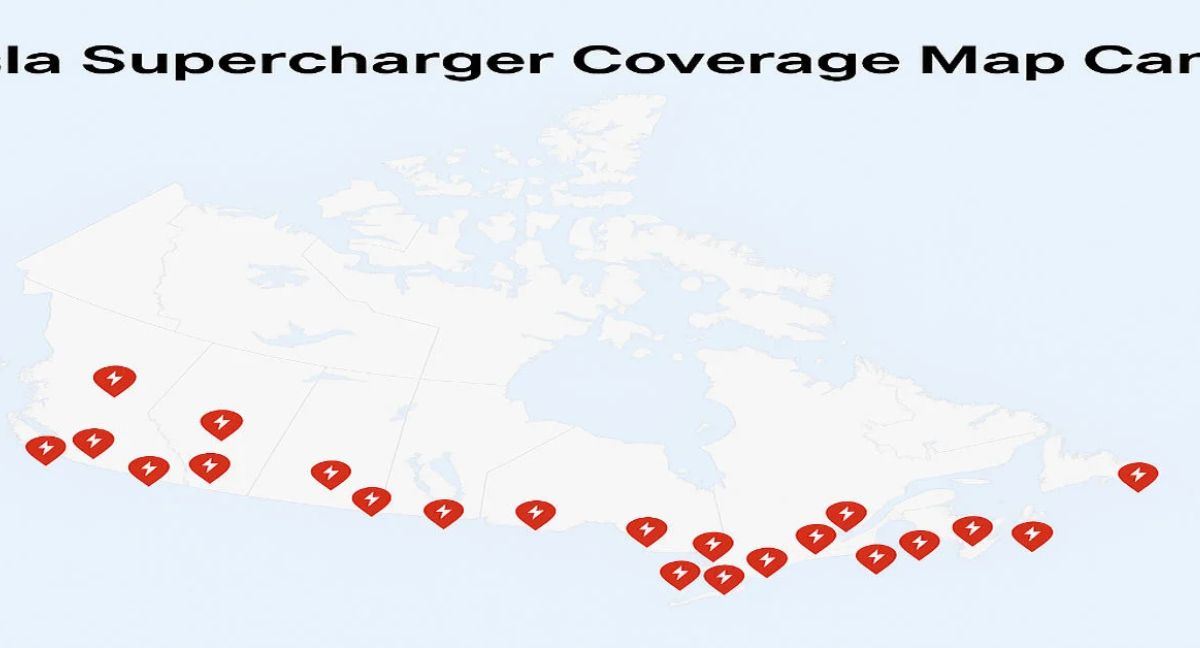
Canada has embraced the electric vehicle transition, and one of the most significant contributors to this growth is Tesla’s Supercharger Network. With long highways, varied climates, and massive distances between cities, Canada requires a strong, dependable charging infrastructure — and Tesla continues to expand rapidly to meet that demand.
The Tesla Supercharger Coverage Map Canada helps EV owners easily locate fast chargers, plan long trips, and identify stations with amenities along their route. This guide breaks down regional coverage, costs, map usage, growth projections, and planned sites for 2025.
🔋 Introduction
Canada’s EV adoption is climbing every year, but charging access remains one of the biggest concerns for new buyers. Tesla addresses this challenge with its nationwide Supercharger network, allowing drivers to travel confidently from the Pacific Coast to the Great Lakes and beyond.
This article covers:
-
Tesla’s Supercharger network overview
-
How to use the Supercharger coverage map
-
Province-by-province station availability
-
Charging speed and technology
-
Long-distance travel analysis
-
Expansion trends and future locations
-
Charging cost comparisons
-
Real-time map tips and EV travel recommendations
⚙️ What Is the Tesla Supercharger Network?
The Tesla Supercharger Network is a global system of DC fast chargers designed for high-speed electric vehicle charging. Newer V3 stations can deliver up to 250 kW, offering 300+ km of range in just minutes.
Key Features
-
Ultra-fast charging: Up to 250 kW (V3 Superchargers)
-
Smart routing: Tesla vehicles automatically plan charging stops
-
Real-time updates: Live stall availability on the Tesla app
-
Open access: Many Canadian Superchargers now support non-Tesla EVs via NACS
Tesla continues to grow its network along major corridors, remote highways, and smaller communities to ensure consistent access across the country.
🗺️ Tesla Supercharger Coverage Map in Canada (2025 Overview)
As of early 2025, Canada features:
-
210+ operational Supercharger stations
-
2,300+ individual charging stalls
-
Dozens of new sites planned by year-end
These locations cover major interprovincial highways, urban areas, and tourist routes.
📊 Table: Tesla Supercharger Coverage by Province (2025)
| Province / Territory | Estimated Locations | % of Total | Key Cities Covered |
|---|---|---|---|
| Ontario | 74 | 35% | Toronto, Ottawa, Windsor, London |
| British Columbia | 57 | 27% | Vancouver, Kelowna, Nanaimo, Kamloops |
| Quebec | 31 | 15% | Montreal, Gatineau, Quebec City |
| Alberta | 18 | 9% | Calgary, Edmonton, Canmore |
| Saskatchewan | 13 | 6% | Saskatoon, Regina |
| Manitoba | 7 | 3% | Winnipeg, Brandon |
| New Brunswick | 6 | 3% | Moncton, Fredericton |
| Nova Scotia | 2 | 1% | Halifax, Truro |
| Prince Edward Island | 1 | 0.5% | Charlottetown |
| Territories / Newfoundland | 0 | — | No active sites yet |
🧭 How to Read and Use the Tesla Supercharger Map
Tesla’s online Supercharger map is interactive and easy to navigate.
Map Icon Guide
-
Red pins → Active and operational stations
-
Grey pins → Planned or under construction
-
Lightning icons → Charging speeds (V2, V3, Urban chargers)
-
Amenities symbols → Food, restrooms, Wi-Fi, parking, etc.
How to Use the Map (Step-by-Step)
-
Open Tesla’s official “Find Us” page.
-
Zoom into your province or travel route.
-
Select a location to view stall count, availability, and charger type.
-
Use Tesla’s in-car navigation for real-time guidance and preconditioning.
The map is especially useful for trip planning and checking congestion during peak travel times.
🌍 Regional Breakdown of Canadian Supercharger Coverage
1. Ontario – Largest Network in Canada
Ontario leads the country with the highest number of stations.
Highlights:
-
Excellent coverage along Highway 401
-
Frequent chargers throughout GTA
-
Expansion toward Northern Ontario (Sudbury, Thunder Bay)
2. British Columbia – Fastest Growing Corridor
BC’s network supports both local commuters and long-distance travellers.
Key areas:
-
Vancouver, Burnaby, Surrey
-
Sea-to-Sky Highway (Squamish, Whistler)
-
Interior communities like Kamloops and Kelowna
3. Alberta – Building Strong Cross-Province Coverage
Alberta continues to expand between major cities.
Coverage:
-
Strong presence in Calgary and Edmonton
-
Growing network along mountain routes toward Banff and Canmore
4. Saskatchewan & Manitoba – Prairie Spanning Routes
These provinces rely heavily on long-distance travel across wide open highways.
-
Saskatchewan: Stations in Regina, Swift Current, Saskatoon
-
Manitoba: Reliable connections between Winnipeg and Ontario
5. Quebec – High EV Adoption Driving Growth
Quebec ranks among the highest EV adoption regions.
Strengths:
-
Montreal to Quebec City routes
-
New stations planned for Trois-Rivières and Lévis
6. Atlantic Canada – Expanding but Early Stage
Steady installations make the region increasingly EV-friendly.
Coverage:
-
New Brunswick: 6 stations
-
Nova Scotia: Halifax + Truro
-
PEI: Charlottetown
Expansion toward Newfoundland is expected soon.
7. Northern Territories – Early Development Phase
As of 2025, no Supercharger stations operate in:
-
Yukon
-
Northwest Territories
-
Nunavut
Pilot fast-charging projects are under review.
⚡ Tesla Supercharger Technology Types
| Charger Type | Power Output | Charge Time | Best For |
|---|---|---|---|
| V2 Supercharger | Up to 150 kW | 270 km in ~30 min | Older locations |
| V3 Supercharger | Up to 250 kW | 320+ km in ~15 min | Most new stations |
| Urban Charger | Up to 72 kW | 160 km in 30 min | Shopping centers / cities |
V3 stations dominate new installations because they deliver faster charging and support cold-weather performance.
🛣️ Long-Distance Travel with Tesla Superchargers
A coast-to-coast EV trip is now possible using the Trans-Canada Highway Supercharger network.
Example Route: Vancouver → Toronto
-
Distance: ~4,400 km
-
Charging stops: ~18
-
Total charging time: Approx. 5–6 hours
-
Estimated cost: ~$200 CAD (variable by province)
Tesla’s built-in trip planner optimizes stops based on terrain, temperature, and battery state.
📈 Growth Trends: Tesla’s Canadian Expansion (2025–2030)
| Year | Total Locations | % Increase | Expansion Focus |
|---|---|---|---|
| 2020 | 138 | — | Ontario & BC |
| 2022 | 178 | +29% | Quebec, Alberta |
| 2024 | 209 | +17% | Atlantic Canada |
| 2025 Projected | 260+ | +24% | Northern Ontario, Prairies, Rural BC |
Tesla aims to reach 400+ sites nationwide by 2030, improving access across rural highways and remote regions.
🪙 Tesla Supercharger Cost in Canada
Costs vary between stations and provinces.
Charging Cost by Province (Average 2025)
| Province | Avg. Rate (CAD/kWh) | Cost (0–80% Model Y) | Range Added |
|---|---|---|---|
| Ontario | $0.28 | ~$14 | ~360 km |
| BC | $0.33 | ~$16.50 | ~340 km |
| Alberta | $0.26 | ~$13 | ~370 km |
| Quebec | $0.29 | ~$14.50 | ~360 km |
Payment is automatic through the Tesla app — no cards required.
🧱 Current Limitations
Although Canada’s network is strong, some challenges remain:
-
Limited northern coverage
-
Busy holiday periods can cause wait times
-
Weather impacts charging efficiency
-
Some older sites still operate at V2 speeds
Tesla is addressing these with:
-
Additional urban/highway stalls
-
V3 upgrades to older stations
-
Partnerships to open chargers to all EV brands
📅 Upcoming Tesla Supercharger Sites in 2025
| Province | Location | Status | Expected Opening |
|---|---|---|---|
| BC | Campbell River | Under Construction | Q1 2025 |
| Alberta | Canmore Expansion | Planned | Q2 2025 |
| Ontario | Milton, Barrie | Planned | Q2 2025 |
| Quebec | Lévis | Proposed | Q3 2025 |
| Manitoba | Kenora | Proposed | Q4 2025 |
| Nova Scotia | Antigonish | Planned | Q4 2025 |
These sites focus on remote travel corridors, tourist areas, and busy commuting zones.
🧭 How to Check Real-Time Supercharger Availability
The Tesla app and in-car interface show:
-
Number of open stalls
-
Current charging speeds
-
Station occupancy levels
-
Pricing per kWh
-
Nearby food/restroom facilities
This ensures smoother travel with minimal waiting.
🔮 The Future of EV Charging in Canada
Canada’s government continues investing in nationwide EV infrastructure. Combined with Tesla’s growth strategy, the next decade will see:
-
400+ Supercharger sites by 2030
-
More NACS-enabled stations for all EVs
-
Cold-climate optimized hardware
-
Solar-powered charging hubs
-
Battery storage at remote sites
The goal: seamless, reliable EV travel across all provinces and territories.
🌟 Conclusion
The Tesla Supercharger Coverage Map Canada is a crucial tool for EV drivers, offering fast-charging access across major cities, remote highways, and popular travel routes. With more than 210 stations and a strong roadmap for expansion, Tesla continues to lead the development of Canada’s fast-charging infrastructure.
Whether you’re planning long-distance trips, daily commutes, or cross-country adventures, Tesla’s growing Supercharger network ensures reliable power wherever you go — helping drive Canada toward a cleaner and more sustainable transportation future.
1 thought on “Tesla Supercharger Coverage Map Canada 2025”